🧴 Integumentary System
Introduction
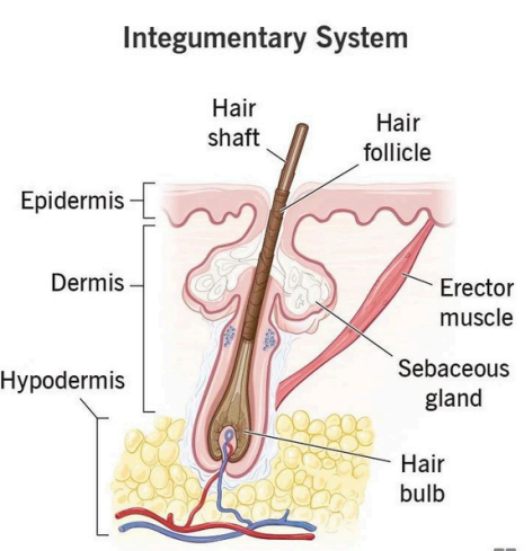
The integumentary system is the outer protective covering of the human body. It includes the skin, hair, nails, and associated glands. This system acts as the body’s first line of defense against environmental hazards and plays an important role in protection, sensation, and temperature regulation.
Functions of the Integumentary System
- Protection – Acts as a barrier against pathogens, UV rays, and physical injury
- Regulation – Controls body temperature through sweat and blood flow
- Sensation – Contains receptors for touch, pain, pressure, and temperature
- Excretion – Removes waste products (salts, urea) through sweat
- Vitamin D synthesis – Skin produces vitamin D when exposed to sunlight
- Water retention – Prevents dehydration by controlling water loss
Structure of the Skin
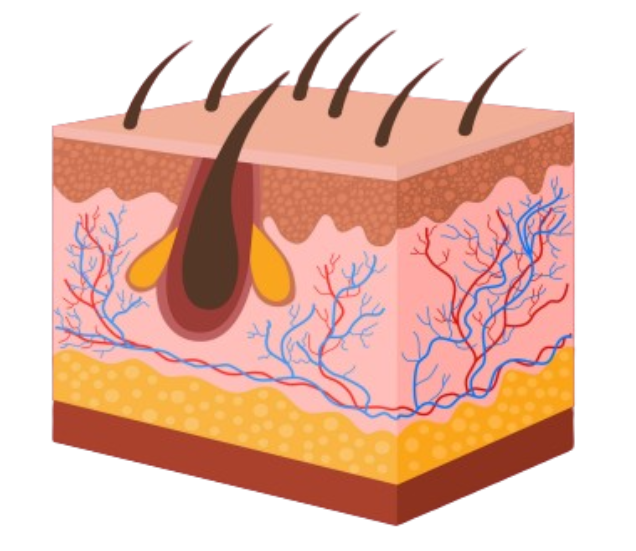
The skin is made up of three main layers:
| Layer | Description |
|---|---|
| Epidermis | Outer layer; made of dead keratinized cells; provides waterproof barrier |
| Dermis | Middle layer; contains nerves, blood vessels, sweat glands, hair follicles |
| Hypodermis | Deepest layer; made of fat and connective tissue; provides insulation and energy storage |
Accessory Structures
| Structure | Description |
|---|---|
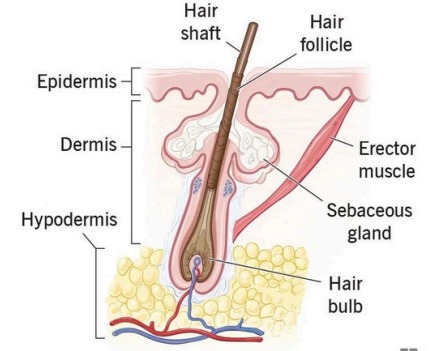
| Hair | Protects the scalp; traps dust; helps regulate temperature |
| Nails | Protects fingertips; aids in picking up small objects |
| Sweat glands | Regulate temperature; excrete waste through sweat |
| Sebaceous glands | Secrete oil (sebum) to moisturize and protect the skin |
| Sensory receptors | Detect touch, pressure, pain, and temperature |
Skin Color and Melanin
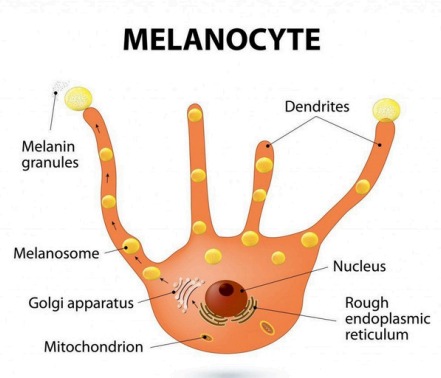
Skin color is primarily determined by melanin, a pigment produced by melanocytes in the epidermis. Melanin protects the skin from UV radiation.
Other factors that influence skin color:
- Genetics
- Sun exposure
- Blood flow
- Health conditions